
As the Belgium Challenger Pro 2025/26 season unfolds, a new wave of young talents is making a name for themselves across the league. From commanding defenders to dynamic forwards, these players are proving their worth with standout performances and impressive data-driven contributions. Using advanced performance metrics, we break down their impact, strengths, and potential, giving a data-driven perspective on why these rising stars are ones to watch. Let’s dive into the numbers and uncover what makes them stand out in Belgium Challenger Pro.
Powered by CompaGPT, the next-generation AI solution from Comparisonator, this analysis simplifies complex football data into clear, actionable insights. With its cutting-edge features, CompaGPT revolutionizes squad analysis, delivering an instant, in-depth assessment of team performance. In just seconds, it pinpoints standout players, uncovers rising young talents, and identifies key areas for enhancement.
Beyond traditional analysis, CompaGPT offers strategic intelligence to refine transfer strategies. By detecting high-potential signings, it empowers clubs to strengthen key positions and scout future stars with accuracy. With CompaGPT, raw data transforms into valuable, data-driven insights, providing teams with a decisive advantage in the transfer market.
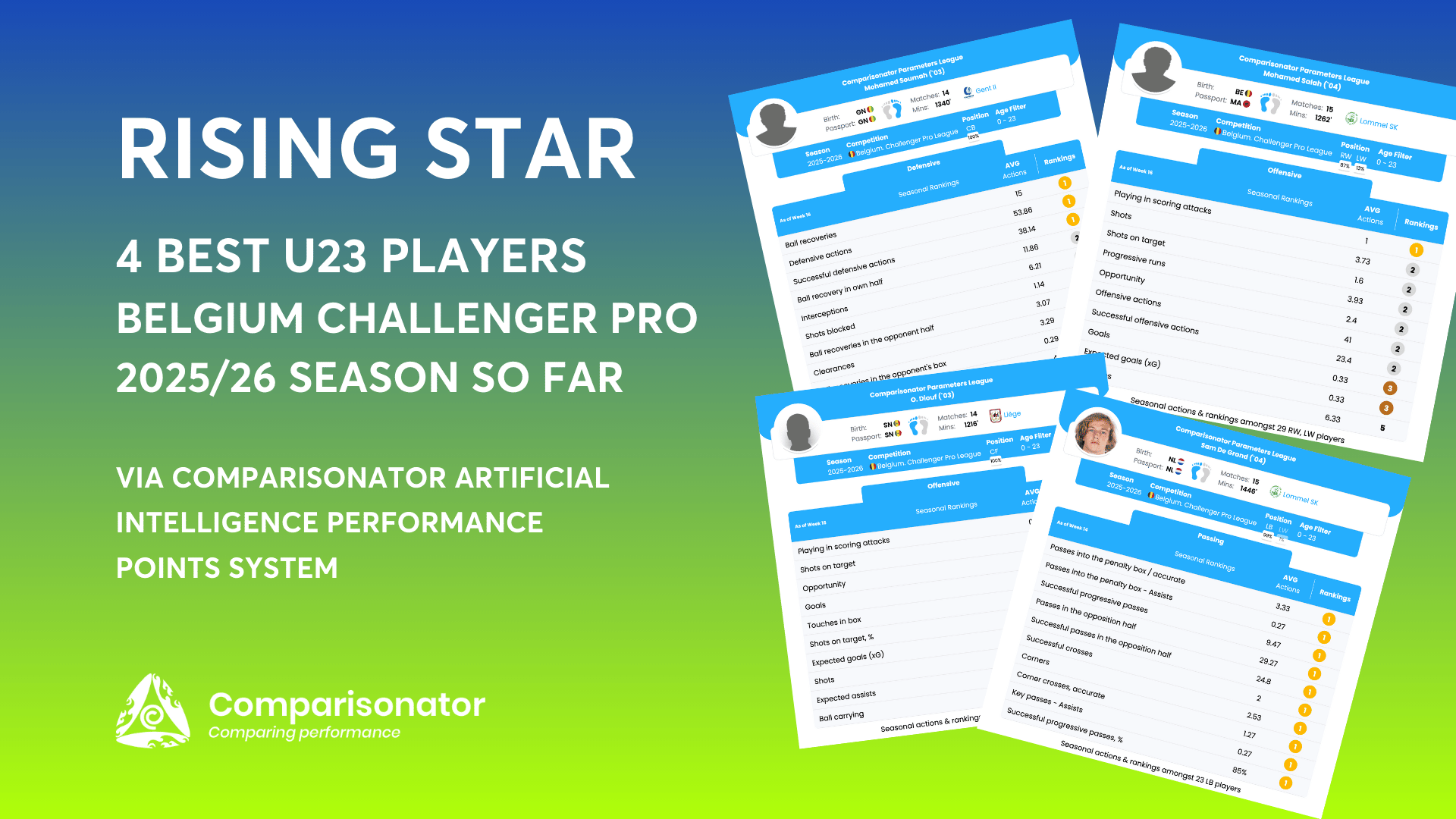
“Rising Star” 4 Best U23 Players Belgium Challenger Pro 2025/26 Season So Far
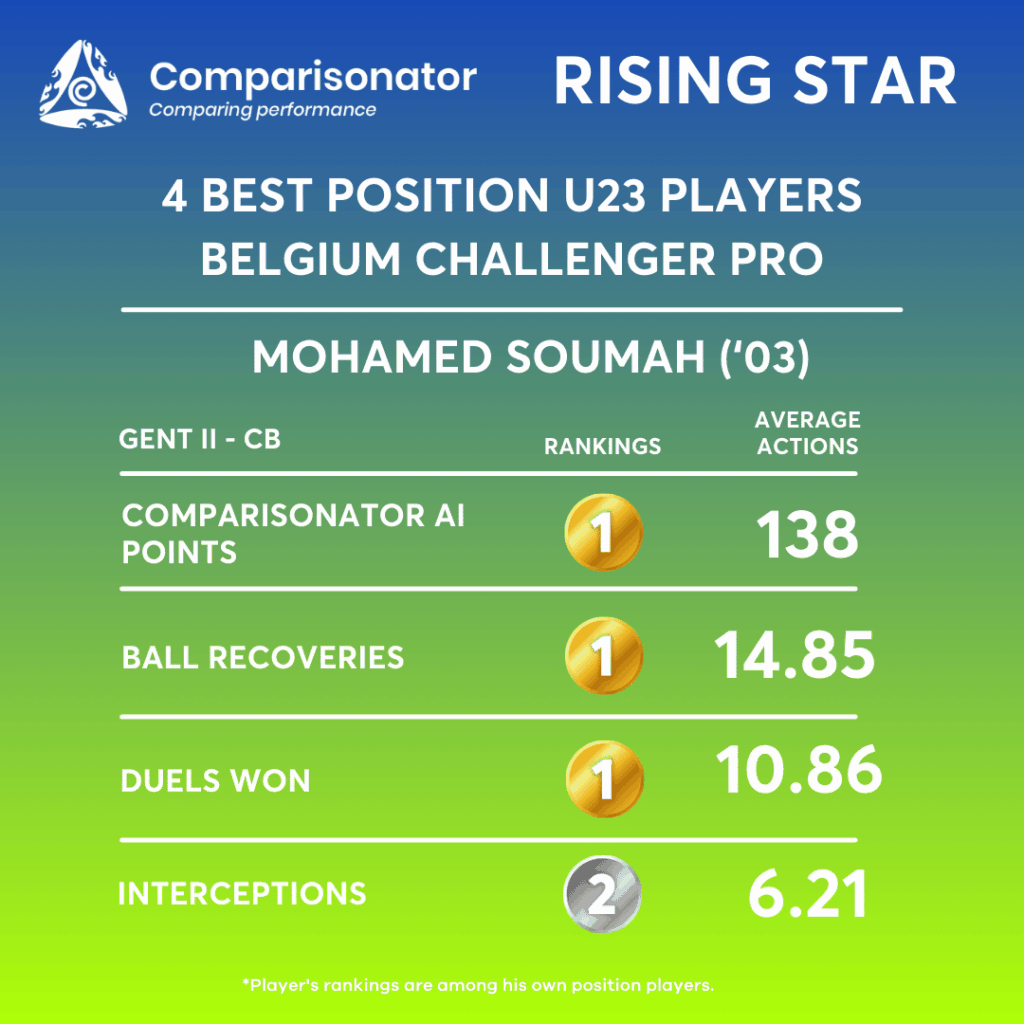
Mohamed Soumah (‘03) (CB) – Gent II
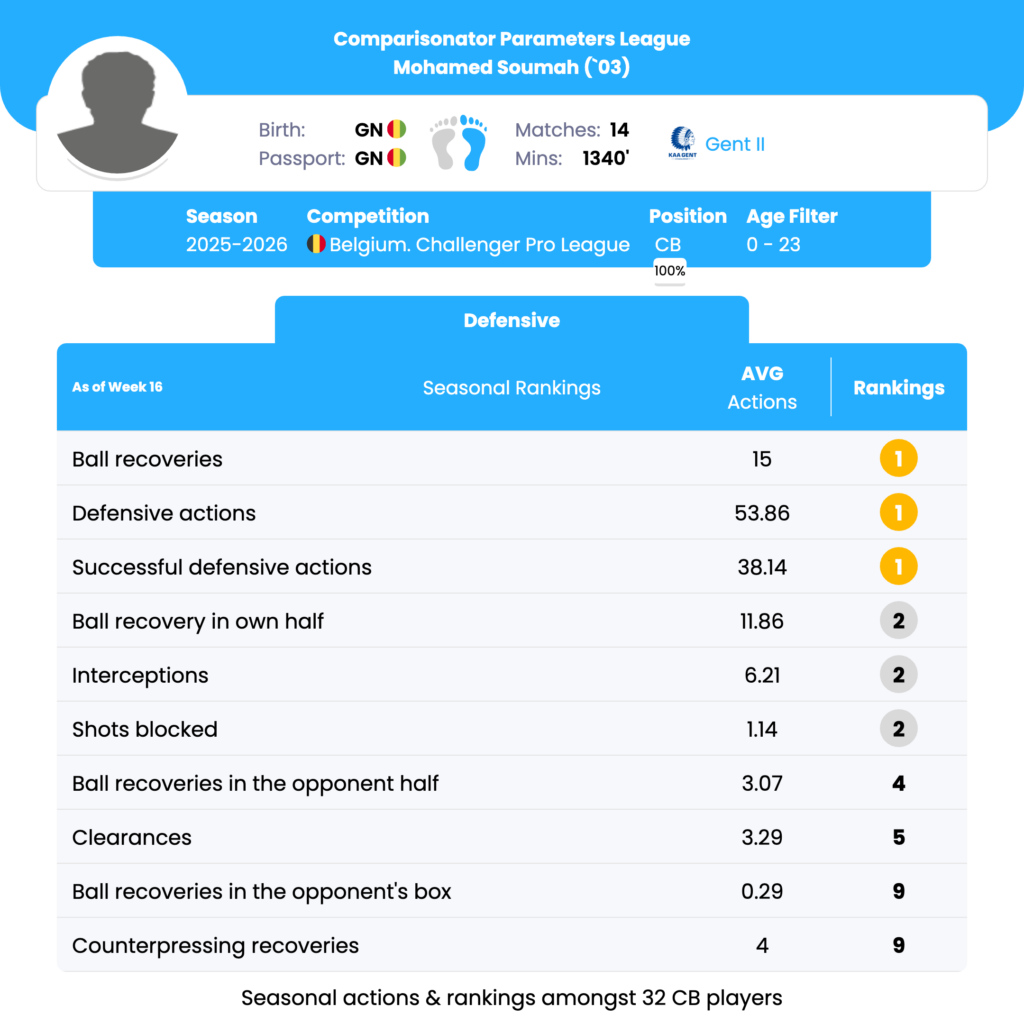
Mohamed Soumah‘s CompaGPT Parameters League Defensive report:
Mohamed Soumah excels in ball recoveries, averaging 15 per match, ranking first among 32 players in the same position. This indicates his exceptional ability to regain possession, which is pivotal in disrupting opposition play and initiating counter-attacks. His closest competitor, Vince Osuji, averages 14.45, demonstrating Soumah’s edge in this aspect. Tactically, his proficiency in ball recoveries is valuable for teams employing high pressing strategies. Ranking second with 6.21 interceptions per match, Soumah demonstrates keen anticipation and reading of the game. Eric N’Jo leads marginally with 6.29, but Soumah’s ability to intercept passes disrupts the opponent’s momentum and can be pivotal in defensive setups requiring proactive defensive engagement.
With 38.14 successful defensive actions per match, Soumah ranks first, indicating his effectiveness in executing defensive plays without fouling or losing position. Vince Osuji follows with 35.36, highlighting Soumah’s reliability and precision in defense. This strength is crucial for maintaining defensive solidity and minimizing goal-scoring opportunities for the opposition.
Mohamed Soumah’s seasonal performance is marked by outstanding rankings in ball recoveries, defensive actions, successful defensive actions, ball recovery in his own half, and interceptions. These strengths underscore his capabilities as a robust central defender, particularly in systems prioritizing defensive engagement and ball regaining. However, attention to reducing ball losses and improving dribble defense can further refine his defensive contributions, enhancing overall team resilience.
Mohamed Soumah (‘03) (CB) – Gent II
Sam De Grand (‘04) (LB) – Lommel SK
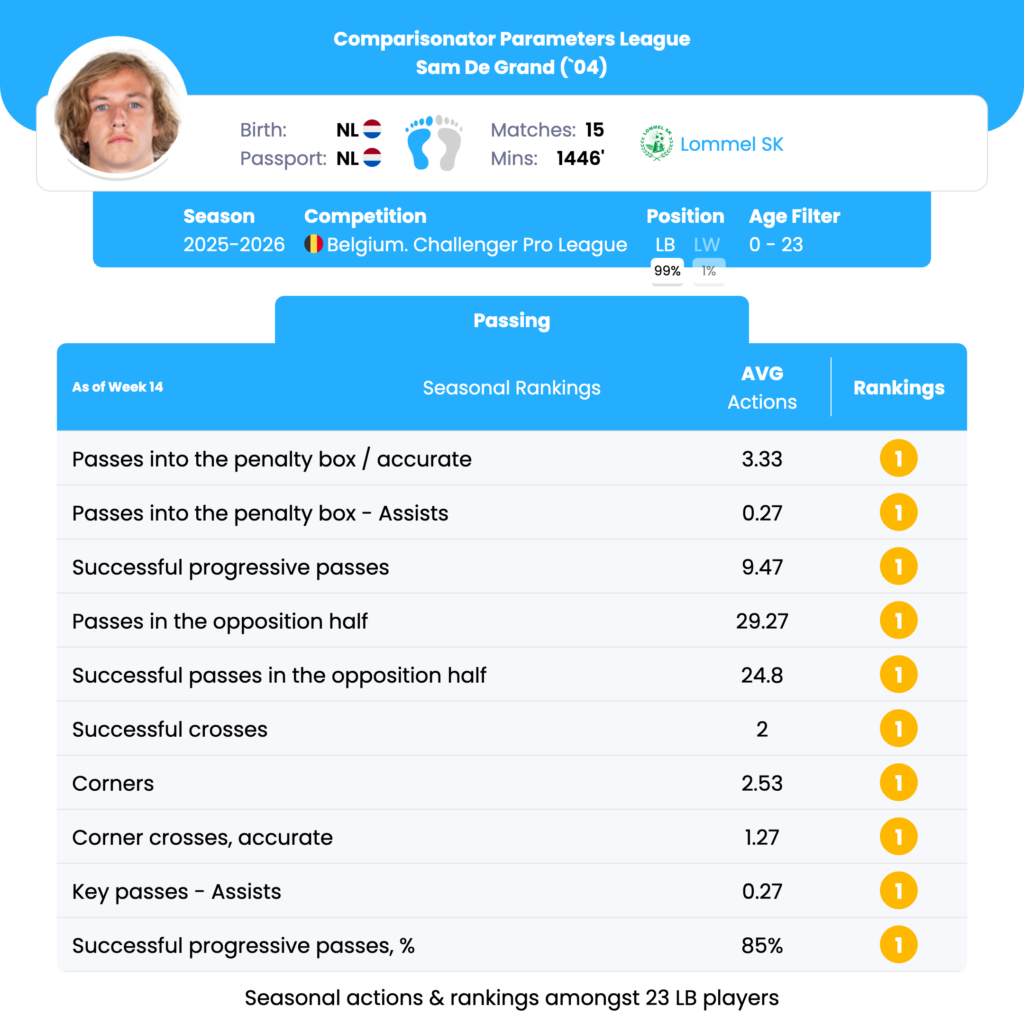
Sam De Grand‘s CompaGPT Parameters League Passing report:
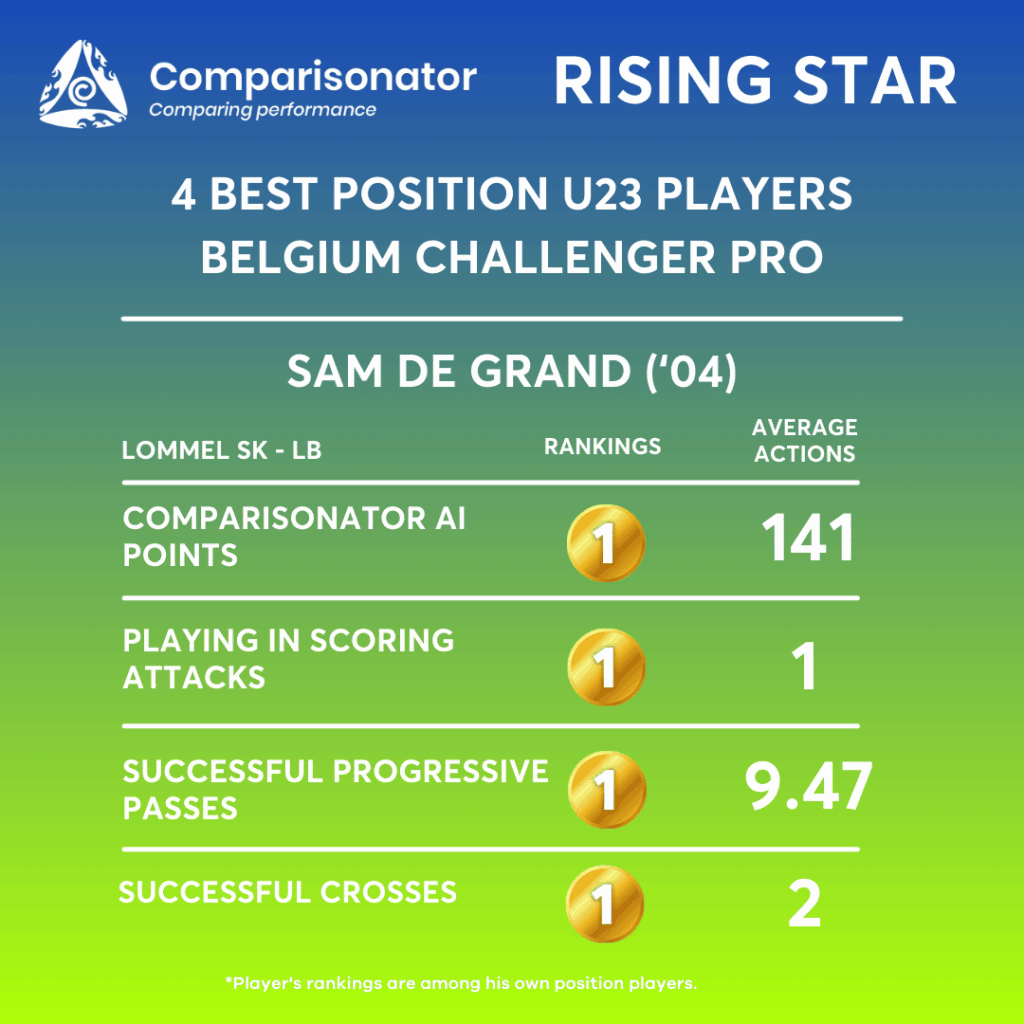
Sam averages 9.47 successful progressive passes per match, the highest in his position, demonstrating his capacity to advance play and connect defense with attack. This ability is essential for transitioning quickly and effectively, providing tactical versatility. Achieving 2 successful crosses per match, Sam is again at the top among his peers, alongside Jordi Palacios who averages 1.71. His crossing prowess enhances his team’s width and attacking options, making him a valuable asset in both open play and set pieces. With 29.27 passes in the opposition half per match, Sam again leads his peers, indicating his active involvement in forward play and ball retention in advanced areas. The ability to maintain possession and dictate play from the back is tactically significant for teams seeking to control the game.
Sam De Grand’s best performances are evident in his leading abilities in passes into the penalty box, passes in the opposition half, successful progressive passes, successful crosses, and corner delivery. These strengths highlight his dynamic offensive contributions and his pivotal role in both attacking and transitional phases of play. By focusing on enhancing his long passing, smart passes, and lateral pass accuracy, Sam can further solidify his position as a key playmaker and a versatile asset in various tactical setups.
Sam De Grand (‘04) (LB) – Lommel SK
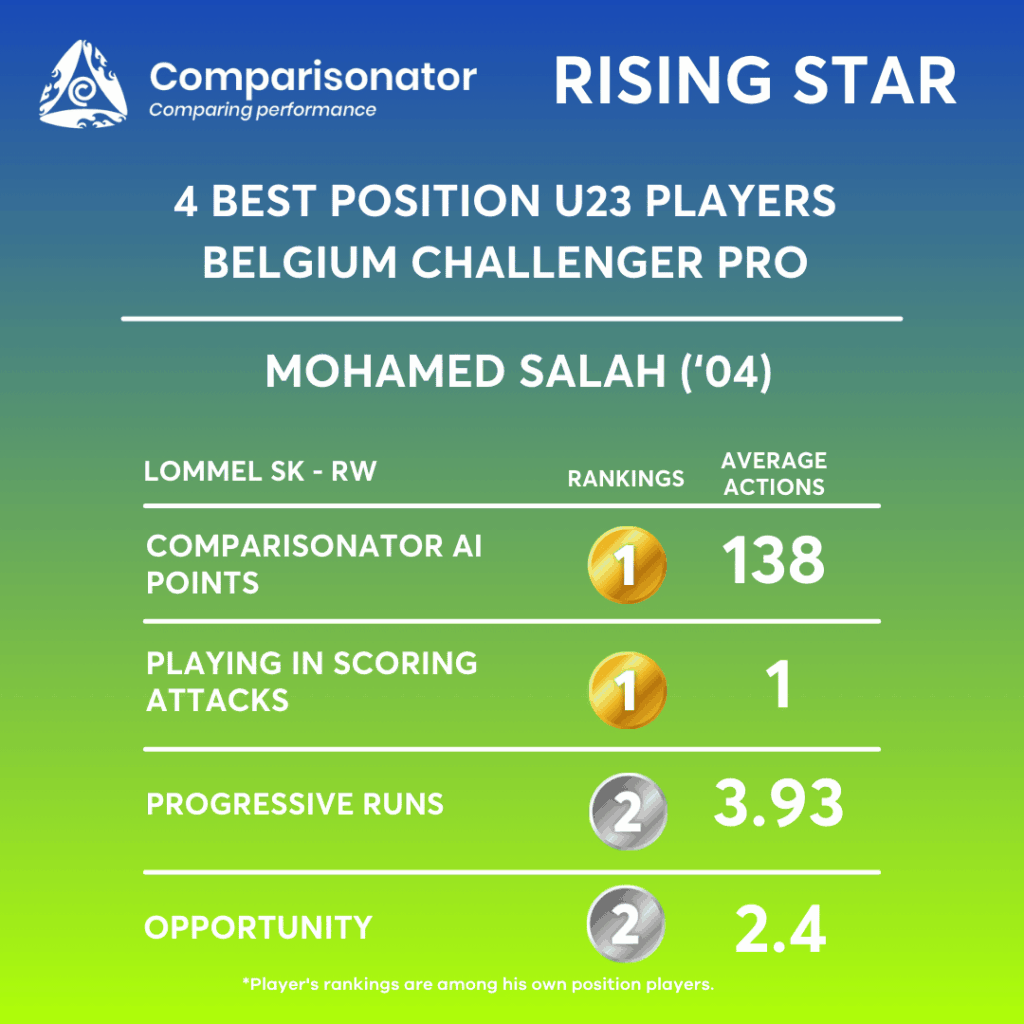
Mohamed Salah (‘04) (RW) – Lommel SK
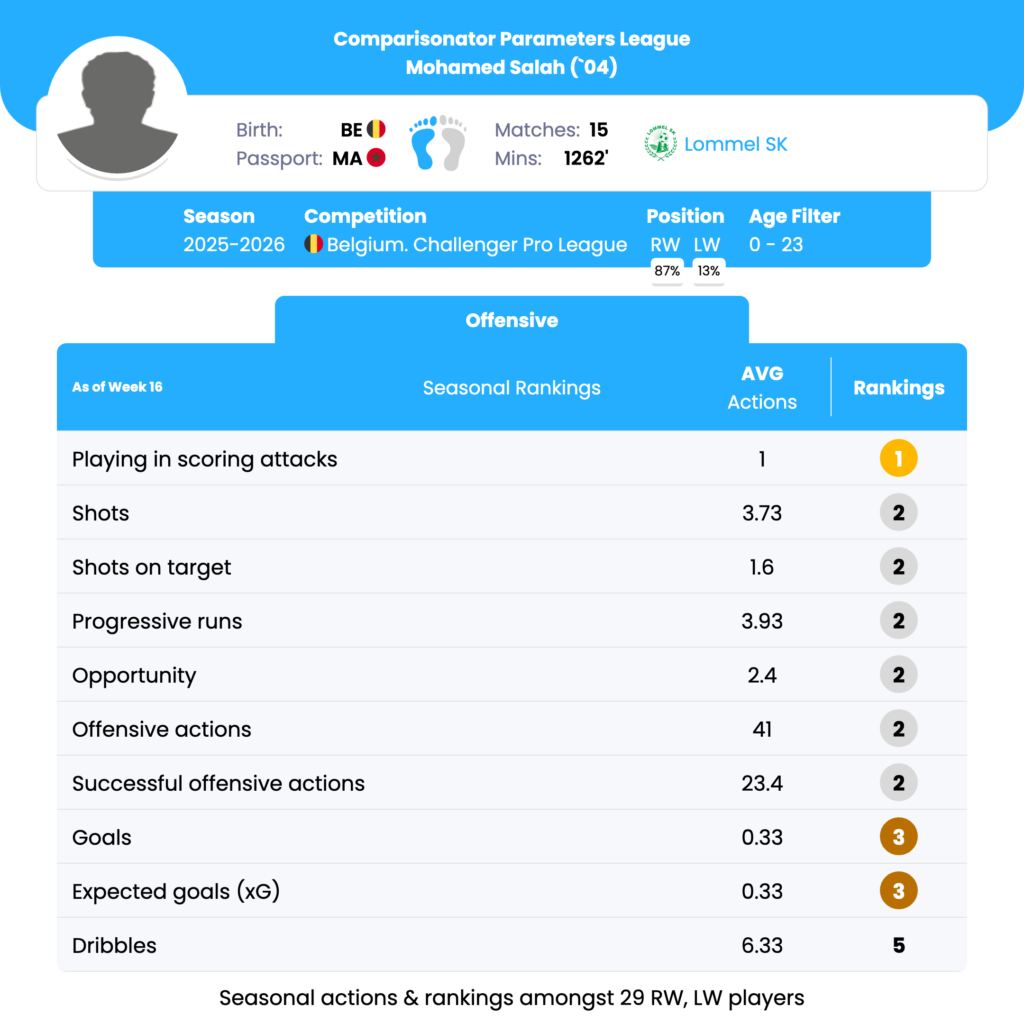
Mohamed Salah‘s CompaGPT Parameters League Offensive report:
Salah leads in this category with an average of 1 per match, ranking 1st among 29 players. This indicates his significant role in initiating or contributing to scoring opportunities, making him a pivotal player in offensive transitions. His ability to be involved in scoring attacks suggests a high level of tactical awareness and positional intelligence, which can be crucial in counter-attacking strategies. With 3.93 progressive runs per match, Salah ranks 2nd, just behind A. Ba. This ability to carry the ball forward through defensive lines emphasizes his skill in advancing play and creating space. Tactical usage of Salah in roles that require breaking defensive setups with pace and dribbling could be beneficial.
Mohamed Salah’s standout strengths include his involvement in scoring attacks, shooting abilities, and progressive runs, indicating his significant offensive contributions. However, improving his playmaking, dribbling success rate, and shot conversion could further enhance his effectiveness and versatility as a winger in Lommel SK’s tactical setups.
Mohamed Salah (‘04) (RW) – Lommel SK
Oumar Diouf (‘03) (CF) – Liege
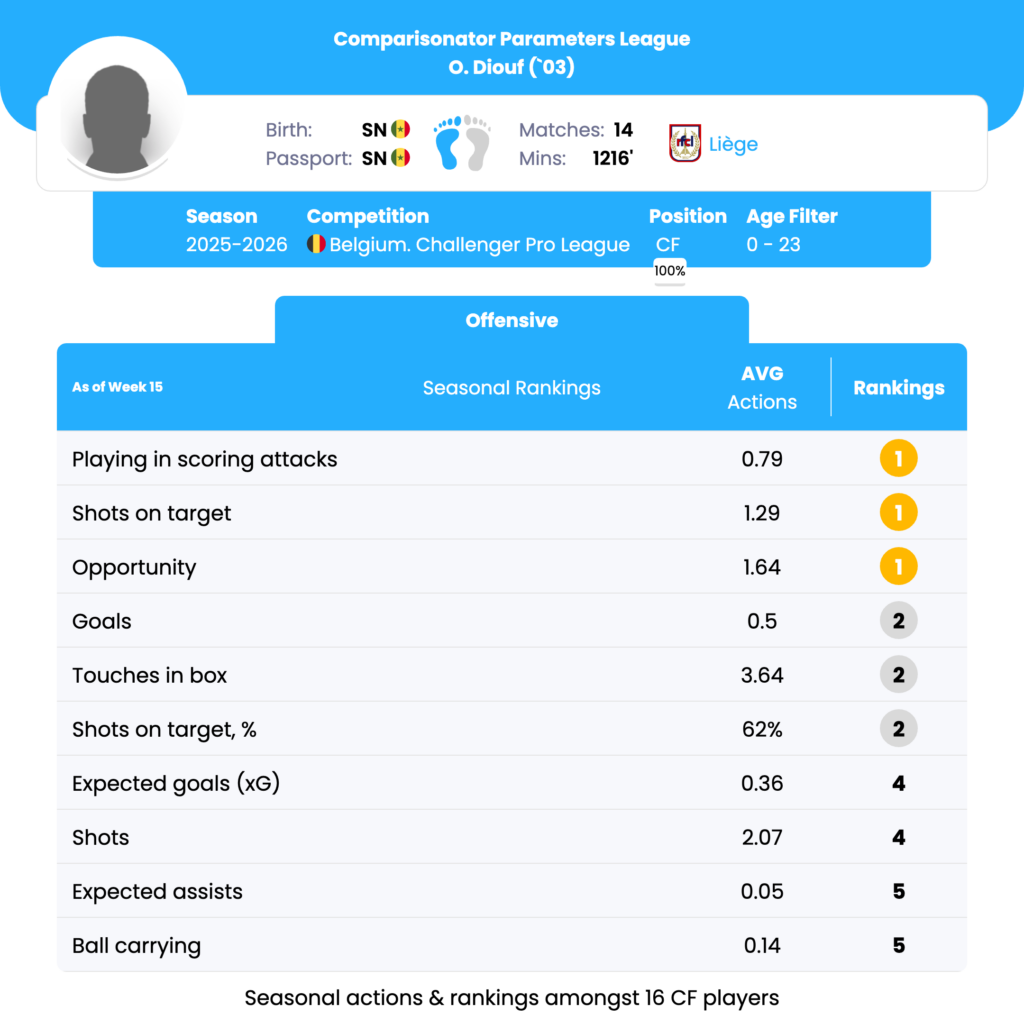
Oumar Diouf‘s CompaGPT Parameters League Offensive report:
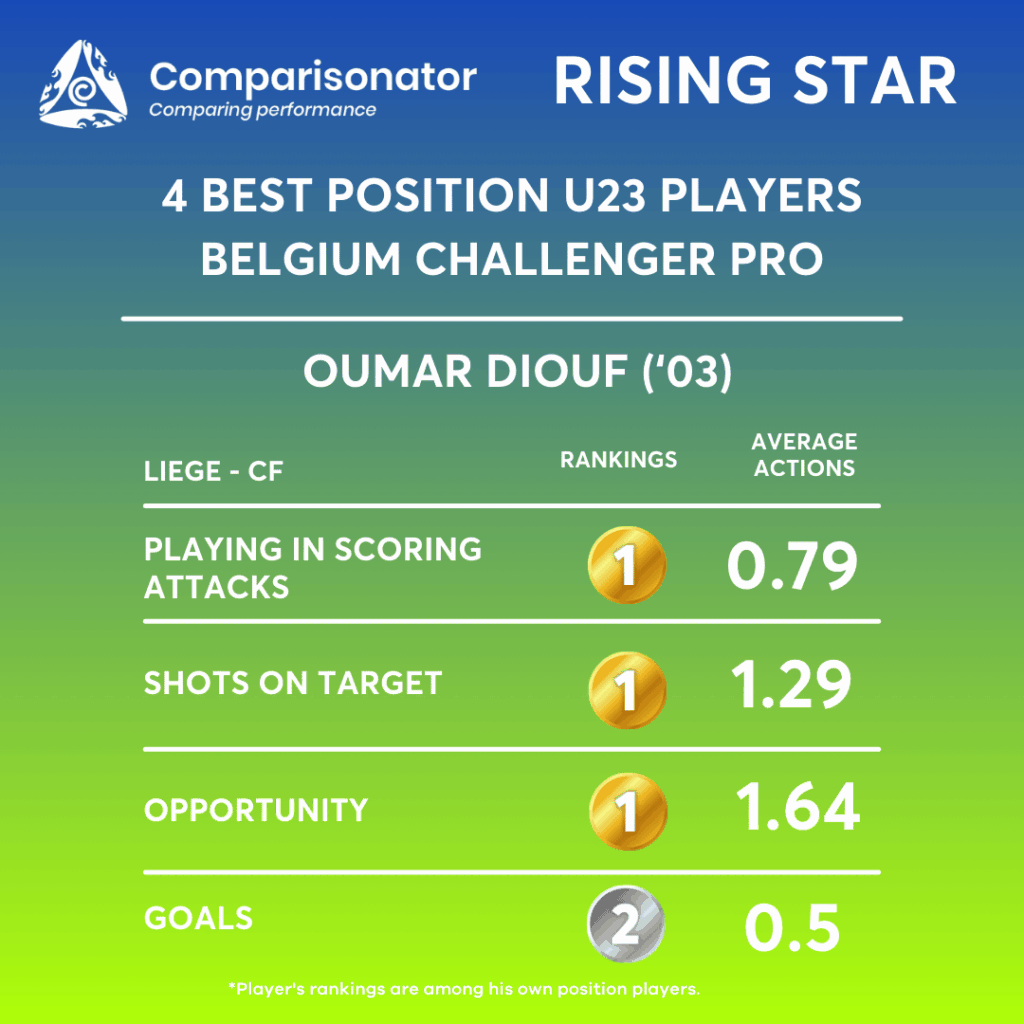
O. Diouf leads his position with an average of 0.79 playing in scoring attacks per match, ranking 1st out of 16 players. This surpasses Léandro Rousseau’s 0.6 average, indicating Diouf’s significant involvement in attacking phases. This strength suggests that Diouf is consistently contributing to his team’s offensive efforts, making him a crucial player in initiating and participating in scoring opportunities. With an average of 1.29 shots on target per match, Diouf ranks 1st among his peers, outperforming Rousseau’s 0.93 average. This demonstrates Diouf’s precision and ability to challenge the opposing goalkeeper regularly, highlighting his threat as a goal-scoring forward. Diouf generates 1.64 opportunities per match, ranking 1st in his position, slightly ahead of Rousseau’s 1.6 average. This reflects his capability to position himself effectively and create scoring chances, underscoring his strategic movement and awareness on the field. Diouf ranks 2nd with 0.5 goals per match, closely trailing Aaron Bibout’s 0.57 average. While not the top scorer, his consistent goal output demonstrates his reliability in converting chances into goals, vital for his team’s offensive success.
O. Diouf’s standout strengths include leading rankings in playing in scoring attacks, shots on target, and opportunities created, highlighting his central role in offensive plays. His ability to consistently convert chances into goals and maintain a strong presence in the box further emphasizes his effectiveness as a forward. However, areas such as expected goals, dribbling, and playmaking through shot assists present opportunities for improvement, which can enhance his overall impact on the field.
Oumar Diouf (‘03) (CF) – Liege