
Modern football no longer allows decisions to be made on instinct alone. Yet numbers without understanding are equally dangerous.
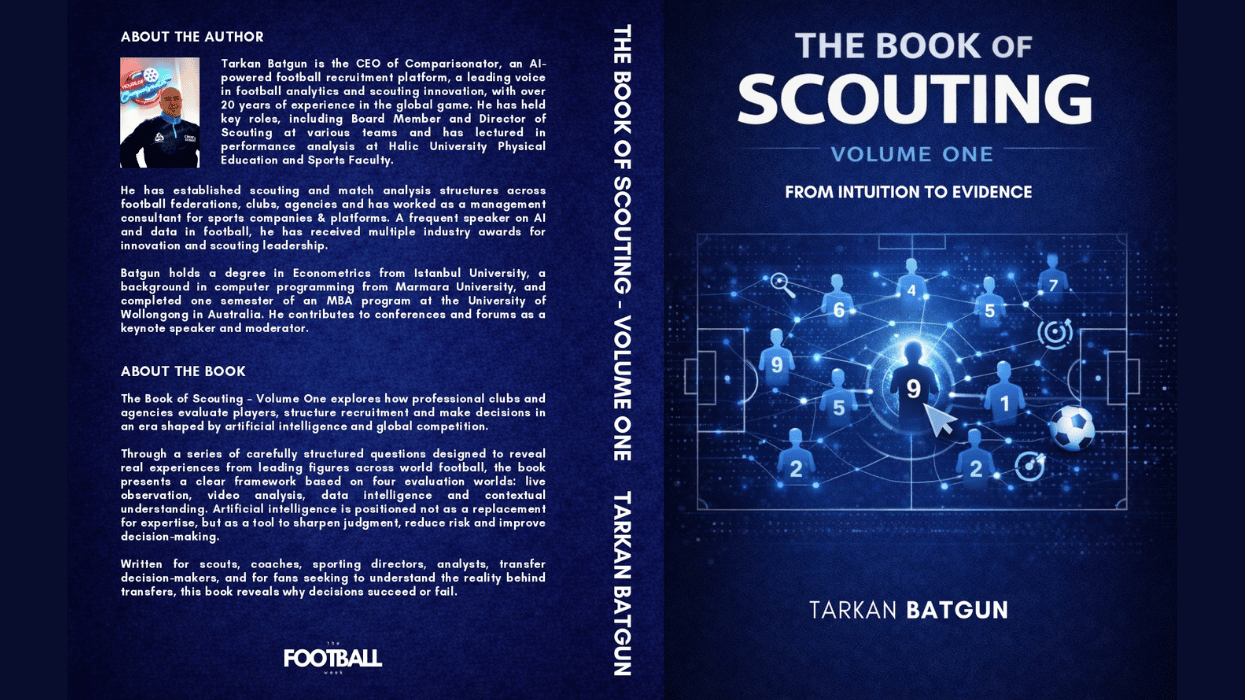
The Book of Scouting – Volume One is a comprehensive exploration of how professional football clubs evaluate players, build recruitment structures and make decisions in an era where human judgment and artificial intelligence must coexist.
Amazon Order Link:
https://www.amazon.com/dp/B0GTLCP8N2
Across more than 500 pages, Tarkan Batgun brings together interviews with leading figures from global football (sporting directors, scouts, coaches, agents, analysts and journalists) alongside structured methodological chapters that dissect the architecture of modern player evaluation. The book introduces a disciplined framework built around four evaluation worlds: live observation, video analysis, data intelligence and contextual understanding. Artificial intelligence is not treated as a replacement for expertise, but as an accelerator that strengthens pattern recognition, risk assessment and long-term planning.
This work moves beyond the superficial question of whether a player is “good.” Instead, it asks where a player functions, what protects their strengths, what exposes their weaknesses and how environment shapes performance over time. Through case studies, decision frameworks and organisational models, the book examines why transfers fail, how roles should be defined before talent is pursued and how structure determines competitive stability.
Designed for scouts, coaches, sporting directors and high-level transfer decision makers, this volume also speaks to football players seeking to understand how they are evaluated, sports university students preparing to enter the professional game and analysts building modern recruitment systems.
But this book is not written only for insiders. It is also written for serious football supporters who want to understand what truly happens behind transfers, squad building and player development. For fans who debate signings, question recruitment decisions and seek deeper clarity beyond headlines, this work opens the door to the strategic thinking that shapes modern football.
Football is not built on moments. It is built on patterns.
Thanks to the World Wide Contributors who participated in this book:
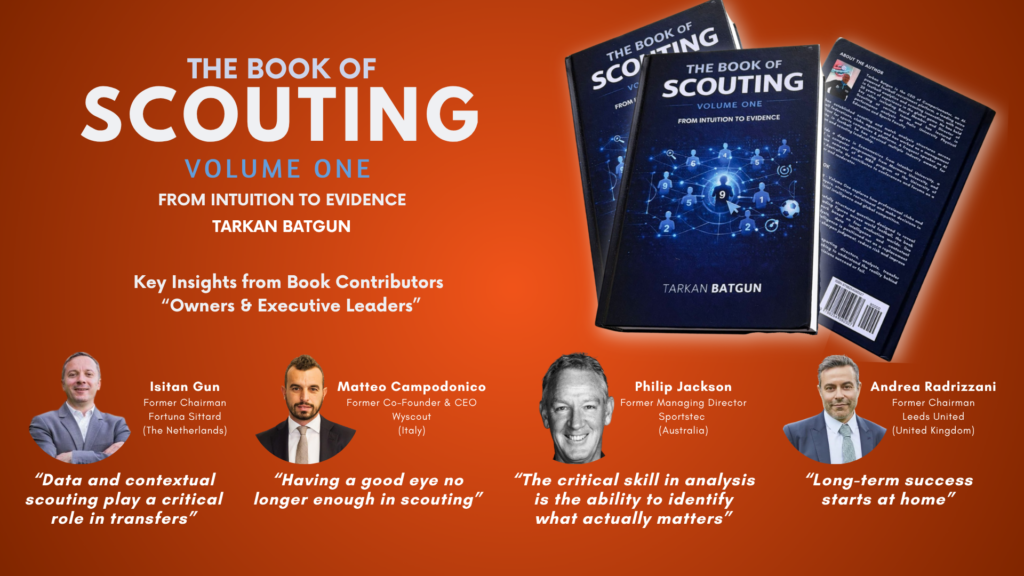
Key Insights from Book Contributors
Owners & Executive Leaders – Owners & Executive Leaders
- Andrea Radrizzani — Former Chairman, Leeds United, (Italy)
“Long-term success starts at home”.
- Isitan Gun — Former Chairman, Fortuna Sittard, (The Netherlands)
“Data and contextual scouting play a critical role in transfers”.
- Matteo Campodonico — Former Co-Founder & CEO, Wyscout, (Italy)
“Having a good eye no longer enough in scouting”.
- Philip Jackson — Former Managing Director, Sportstec, (Australia)
“The critical skill in analysis is the ability to identify what actually matters”.
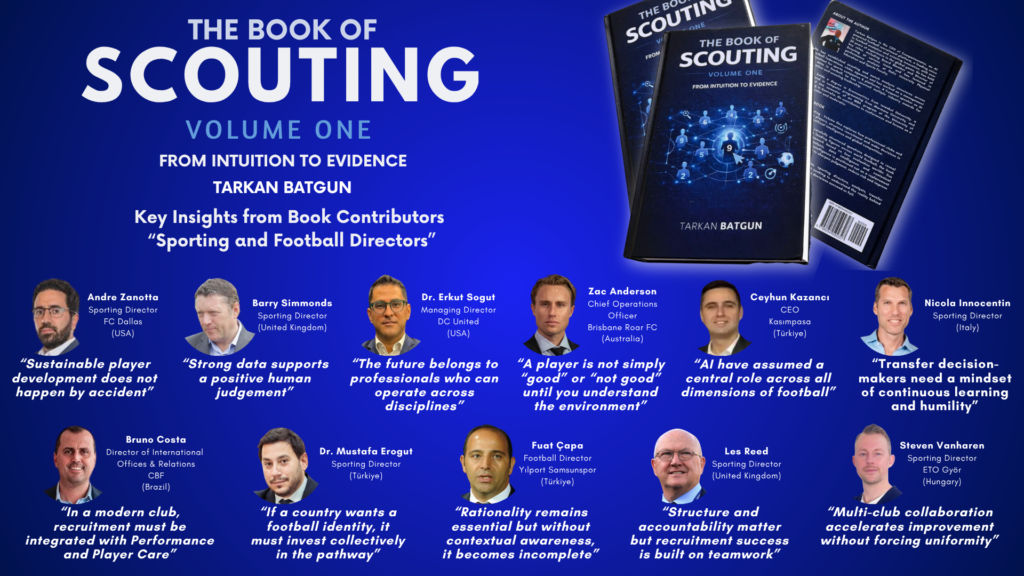
Key Insights from Book Contributors
Sporting and Football Directors
- Andre Zanotta — Sporting Director, FC Dallas, (USA)
“Sustainable player development does not happen by accident”.
- Barry Simmonds — Sporting Director, (United Kingdom)
“Strong data supports a positive human judgement”.
- Bruno Costa — Director of International Offices & Relations, CBF, (Brazil)
“In a modern club, recruitment must be integrated with Performance and Player Care”.
- Ceyhun Kazanci — CEO, Kasimpasa, (Türkiye)
“AI have assumed a central role across all dimensions of football”.
- Dr. Erkut Sogut — Managing Director, DC United (USA)
“The future belongs to professionals who can operate across disciplines”.
- Dr. Mustafa Erogut — Sporting Director, (Türkiye)
“If a country wants a football identity, it must invest collectively in the pathway”.
- Fuat Capa — Football Director, Samsunspor (Türkiye)
“Rationality remains essential but without contextual awareness, it becomes incomplete”.
- Les Reed — Sporting Director, (United Kingdom)
“Structure and accountability matter but recruitment success is built on teamwork”.
- Nicola Innocentin — Sporting Director, (Italy)
“Transfer decision-makers need a mindset of continuous learning and humility”.
- Steven Vanharen — Sporting Director, ETO Gyor (Hungary)
“Multi-club collaboration accelerates improvement without forcing uniformity”.
Key Insights from Book Contributors
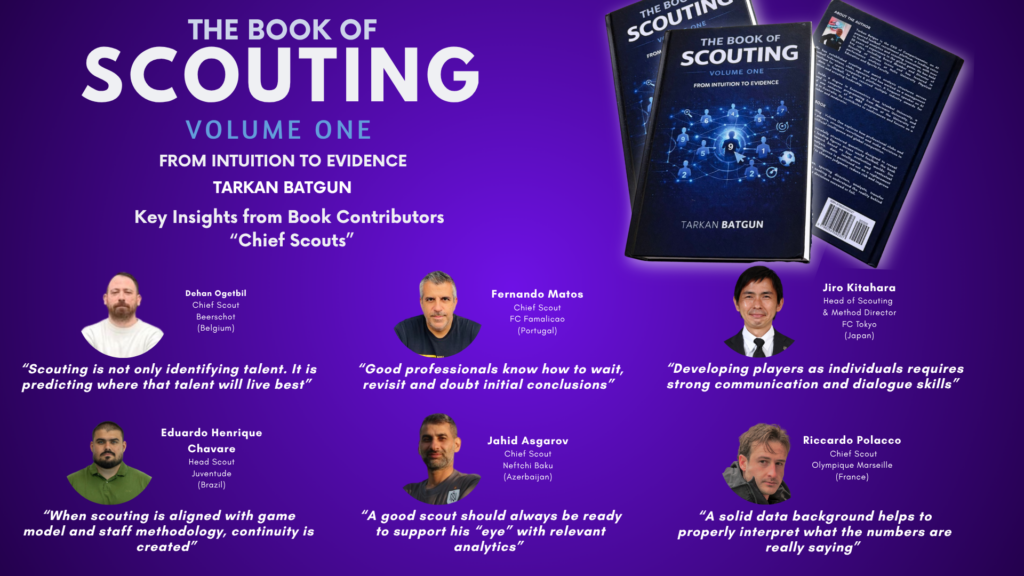
Chief Scouts
- Dehan Ogetbil — Chief Scout, Beerschot, (Belgium)
“Scouting is not only identifying talent. It is predicting where that talent will live best”
- Eduardo Henrique Chavare — Head Scout, Juventude, (Brazil)
“When scouting is aligned with game model and staff methodology, continuity is created”
- Fernando Matos — Chief Scout, FC Famalicao, (Portugal)
“Good professionals know how to wait, revisit and doubt initial conclusions”
- Jahid Asgarov — Chief Scout, Neftchi Baku, (Azerbaijan)
“A good scout should always be ready to support his “eye” with relevant analytics”
- Jiro Kitahara — Head of Scouting & Method Director, FC Tokyo, (Japan)
“Developing players as individuals requires strong communication and dialogue skills”
- Riccardo Polacco — Chief Scout, Olympique Marseille, (France)
“A solid data background helps to properly interpret what the numbers are really saying”
Key Insights from Book Contributors
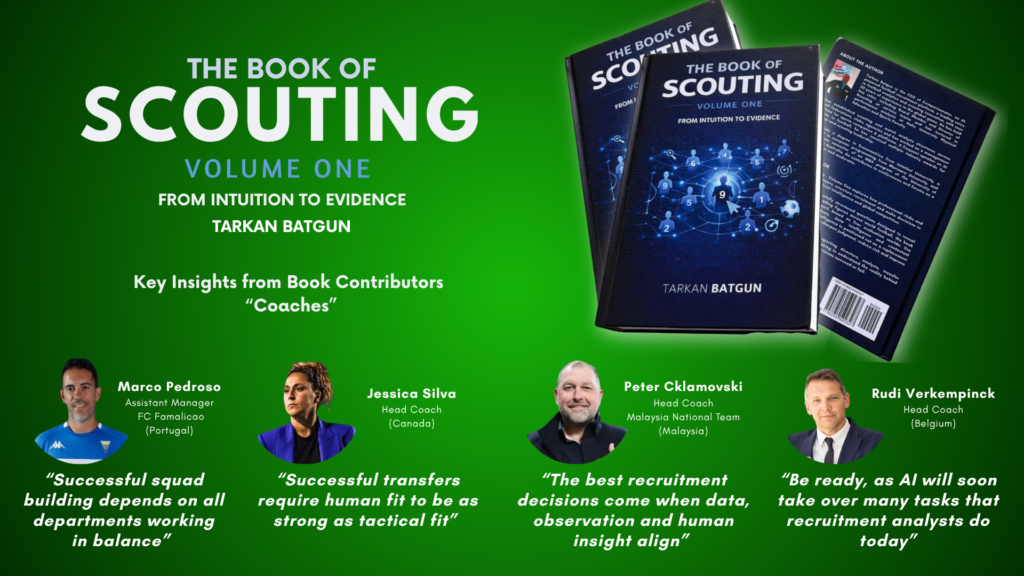
Coaches
- Marco Pedroso — Assistant Manager, FC Famalicao, (Portugal)
“Successful squad building depends on all departments working in balance”
- Jessica Silva — Head Coach, (Canada)
“Successful transfers require human fit to be as strong as tactical fit”
- Peter Cklamovski — Head Coach, Malaysia National Team (Malaysia)
“The best recruitment decisions come when data, observation and human insight align”
- Rudi Verkempinck — Head Coach, (Belgium)
“Be ready, as AI will soon take over many tasks that recruitment analysts do today”
Key Insights from Book Contributors
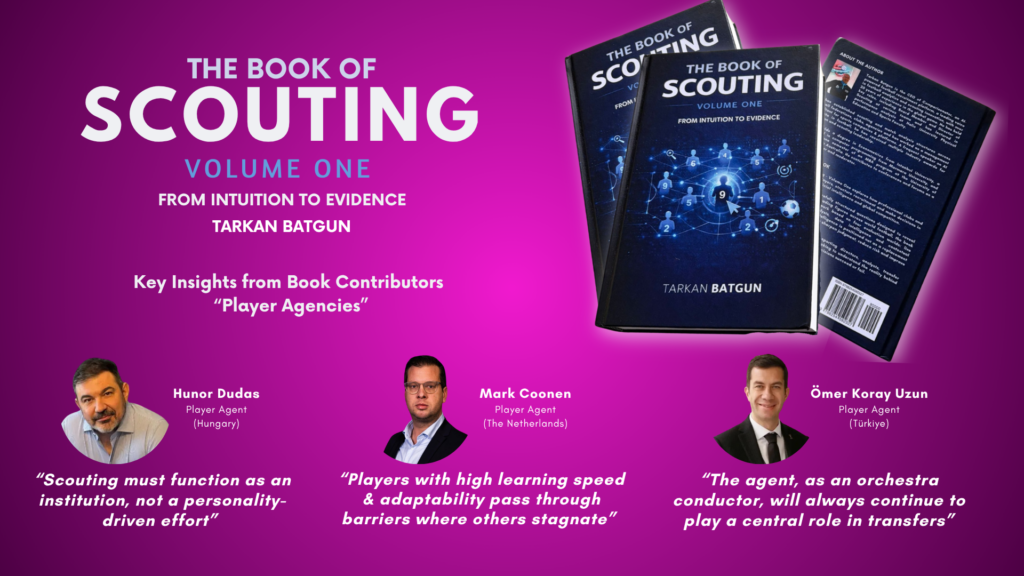
Player Agencies
- Hunor Dudas — Player Agent, (Hungary)
“Scouting must function as an institution, not a personality-driven effort”
- Mark Coonen — Player Agent, (The Netherlands)
“Players with high learning speed & adaptability pass through barriers where others stagnate”
- Omer Koray Uzun — Player Agent, (Türkiye)
“The agent, as an orchestra conductor, will always continue to play a central role in transfers”
Key Insights from Book Contributors
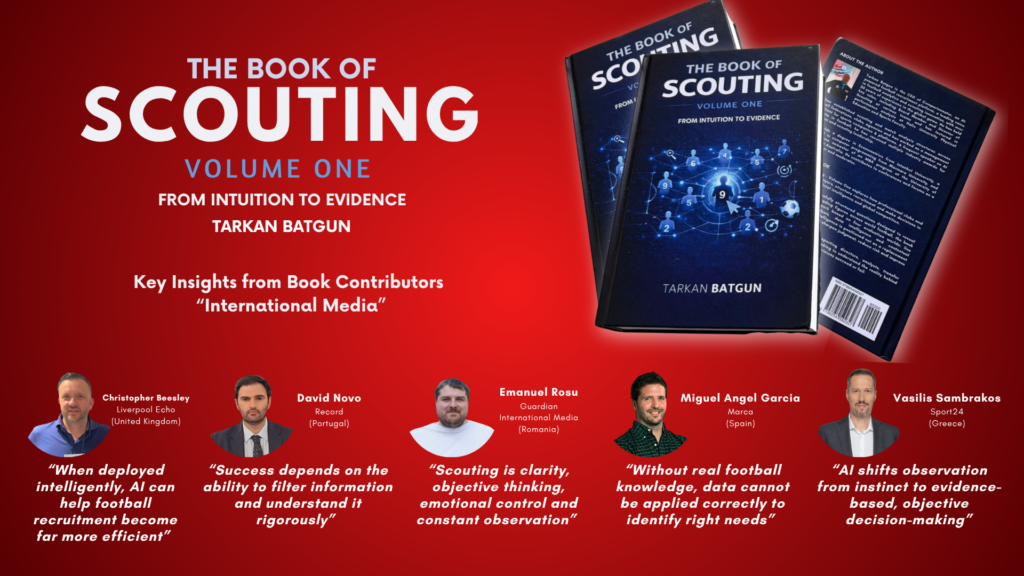
International Media
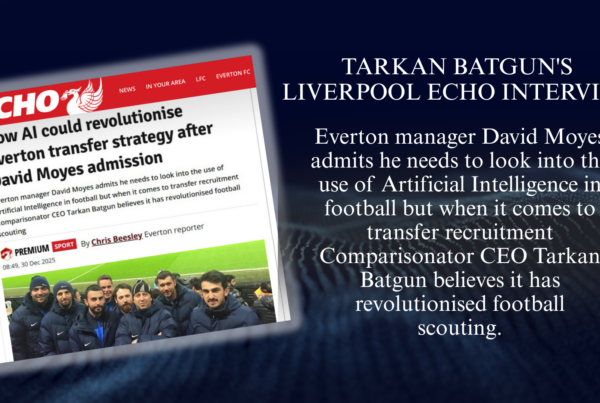
- Christopher Beesley — Liverpool Echo, (United Kingdom)
“ When deployed intelligently, AI can help football recruitment become far more efficient”
- David Novo — Record, (Portugal)
“Success depends on the ability to filter information and understand it rigorously”
- Emanuel Rosu — Guardian & International Media, (Romania)
“Scouting is clarity, objective thinking, emotional control and constant observation”
- Miguel Angel Garcia — Marca, (Spain)
“Without real football knowledge, data cannot be applied correctly to identify right needs”
- Vasilis Sambrakos — Sport24, (Greece)
“AI shifts observation from instinct to evidence-based, objective decision-making”
Amazon Order Link:
https://www.amazon.com/dp/B0GTLCP8N2
Part I — The Foundations of Scouting
- What Scouting Really Is
- The Four Worlds of Football Evaluation 1
- Context: The Invisible Engine Behind Performance 2
- The Human Side of Talent
- The Myth of Objectivity
PART II — Seeing the Game Differently
- Behaviours Over Actions
- Tempo, Space, Fitness and Decision Windows
- Role-Based Scouting
- Pattern Recognition and Tactical Intelligence
Part III — The Structure Around Scouting
- The Scouting, Data and AI Alliance
- Youth Development and the Coming Revolution
- Building Pathways
- The Scout’s Mindset
- The Scout’s Environment
- Scouting in Player Agencies
- Decision-Making: The Final 10% That Controls 90% of Outcomes
Part IV — The Future of Scouting
- The Loan Department: Football’s Most Ignored Revenue Engine
- Scouting Under Constraints
- Succession Planning
- Leadership in Modern Scouting
Part V — Worldwide Contributors
- Owners and Executive Leaders
- Sporting and Football Directors
- Chief Scouts
- Coaches
- Player Agents
- International Media
Appendix I — Structure of a Modern Scouting Department and Decision Frameworks
Appendix II — Advanced Models: AI, Pattern Intelligence and Future Systems
Appendix III — Practical Checklists and Evaluation Templates
Appendix IV — Player Pathway and Loan Toolkit
Appendix V — Scouting Report Templates
Appendix VI — Modern Role Profiles in Professional Scouting
Appendix VII — Decision Architecture, Integrity and Department Performance
Amazon Order Link:
https://www.amazon.com/dp/B0GTLCP8N2
Book Reviews from the readers:
Fernando Matos – Chief Scout of FC Famalicao:
“An excellent read. The Book of Scouting – Volume One: From Intuition to Evidence is a high-quality, well-structured, and highly enriching work for anyone who truly works in or has a strong interest in scouting. It brings together practical knowledge, reflection, and methodology in a clear and intelligent way. A book that adds real value and deserves to be read with attention. I recommend“
Les Reed – Sports Director:
“I have spent much of my career exploring the ‘Intuition – Data Scale” in scouting , recruitment and Talent Identification. Tarkan Batgun has compiled the ‘ book of Truths’ and debunked the myths around successful player recruitment by delivering a piece of work that will impact the scouting world in ways we have not seen since ‘Moneyball’. It has been a pleasure to contribute in a very small way.“
Nicola Innocentin-Former Sports Director Al Fateh
“This is a very well-written and insightful book for anyone involved in football scouting, recruitment, or talent identification. What I appreciated most is that it goes beyond general opinions and gives a clear framework for how players should really be assessed in today’s game. The book combines live scouting, video analysis, context, and data in a practical and intelligent way. It explains very well that scouting is not only about whether a player is talented, but whether he fits a specific style of play, environment, and long-term project. I also liked the way the role of AI and data is presented. It is not exaggerated or unrealistic. Instead, the book shows how technology can support better decisions without replacing football knowledge, experience, and human judgement. Clear, modern, and full of relevant insights, this is a book that can be useful both for experienced professionals and for younger people who want to understand scouting at a deeper level. Highly recommended.“
Dr. Erkut Sogut – General Manager
“The book stands out for the real challenge in structure and decision-making, not just talent ID.
The clarity around governance , alignment and process reflects how high-level environments actually function. The emphasis on patterns over isolated observations and the realistic positioning of AI are also very well judged. The sections on pattern recognition also align well with current data-driven methodologies, without overestimating technology.
It is a practical framework that people in the game can actually use , not just theory.
Overall, this is a valuable contribution for professionals looking to move from reactive scouting to structured , evidence-based recruitment system. This book sets a high standard for scouting education. It brings clarity, structure, and real insight into a role that is often misunderstood. An essential read for anyone looking to enter or grow within football.“
Marco Ybarra – Football Executive
“This book offers a genuinely insightful look into how modern football clubs make recruitment decisions. What stands out is its balance between data and human judgment—it doesn’t overhype AI, but shows how it complements traditional scouting. The real-life examples and structured approach make it feel practical rather than theoretical. It definitely changed the way I think about player evaluation and transfers, especially the importance of context and system fit. I definetely recommend football people to read this masterpiece“
Jiro Kitahara – Chief Scout & Methodology Director – FC TOKYO
I am proud to be part of The Book of Scouting Volume One. Scouting is the most important thing in today’s football. We can learn a lot from this book. It could be helpful for everybody in football area.
Steven Vanharen – Sports & Technical Director – ETO FC
I am very happy to be part of The Book of Scouting Volume One. It is very good that the book write Tarkan Batgun bundled his expertise but also the knowledge of experts around him in one book. I think people in scouting and recruitment should buy the book. Because it is a guideline for scouting through data and recruitment
Riccardo Polacco – Chief Scout – Olympic Marseille
I am really honoured to be part of the Book of Scouting By Tarkan Batgun. I think scouting is special world and will continue in an evolution. This something highly covered in this book. Being on time is extremely important. Following the evolution of football is also more important. AI is one of the key aspects in this business. Be on top of everything, update yourself, explore all aspects of scouting, can also be plus. For scouts like us but also football experts, managers, football clubs. So I am really glad to be part of the book. I can only suggest to buy it. It is for sure worth to read it
Marc Coonen – Former Technical Director Pec Zwolle – Agent of Euro Soccer Advice
I am really happy to be part of this great Book of Scouting written by Tarkan Batgun. It is amazing. For example we use Comparisonator in an everyday world and the book reflects the new world of transfers. This book is amazing. It is Tarkan’s life work. If you really want to learn anything about scouting, you really must read this book.
Dr. Mustafa Erogut – Former Vice President of TFF & Istanbul Basaksehir FK
Thank you very much for Tarkan Batgun for his contribution Football Academies and football literature. This is something one of a kind. I hope that it would contribute to every youth who is interested to go into the scouting and football industry.