
A Global Football Conversation Comes to Istanbul, 26–27 September 2026
Different leagues, different markets and different football cultures often face the same questions: Where is the next opportunity? How should talent be evaluated? And how are technology and new ideas changing the way clubs make decisions?
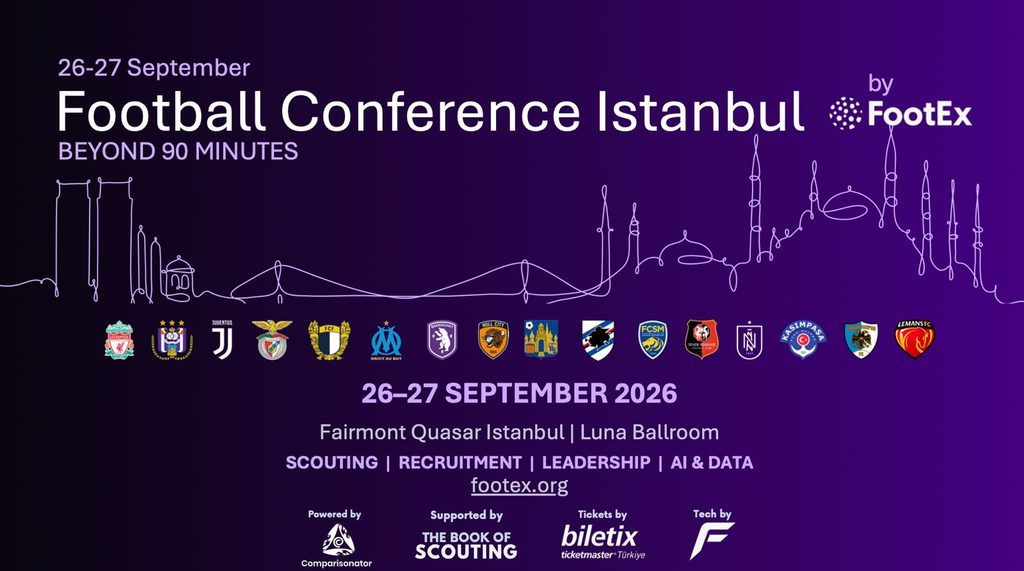
These questions will be at the centre of Football Conference Istanbul by FootEx, taking place at Fairmont Quasar Istanbul on 26–27 September 2026. Powered by Comparisonator and supported by The Book of Scouting as an Event Partner, the conference will put international football experience on one stage, with Presidents, Sporting Directors, Chief Scouts and senior industry professionals contributing directly to the programme.
For the Comparisonator community, Istanbul offers an opportunity to take these conversations beyond the screen, meet the people facing these decisions every day and exchange perspectives from different corners of the football world.
BEYOND 90 MINUTES: Insights from Across World Football
Opportunity in football can exist far beyond the markets receiving the greatest international attention. As information becomes more accessible, recruitment teams have the ability to look deeper into competitions, compare performance across different environments and identify players before they become familiar names.
That idea takes us to Kazakhstan. Using Comparisonator’s technology, this edition of Beyond 90 Minutes examines a group of young players making an impact in the 2026 Kazakhstan Premier League and asks what their performances can tell us about talent emerging from a market that deserves closer attention.
Here are four U23 players from the Kazakhstan Premier League whose 2026 performances stand out in the data.
As the 2026 Kazakhstan Premier League season progresses, a fresh generation of young prospects is quickly establishing themselves across the division. Ranging from dominant defenders to explosive attackers, these athletes are showcasing their value through exceptional performances and strong statistical output. Utilizing advanced performance metrics, we analyze their on-pitch impact, core strengths, and future potential, providing an objective look at why these emerging talents demand your attention. Let’s delve into the data and discover exactly what sets them apart in the Kazakhstan Premier League.
Driven by CompaAI, the next-generation artificial intelligence engine from Comparisonator, this breakdown translates complicated football statistics into clear, actionable intelligence. Through its state-of-the-art capabilities, CompaAI completely transforms squad evaluation, providing immediate, comprehensive reviews of team dynamics. Within seconds, the system highlights top performers, discovers emerging youth prospects, and spots critical areas for tactical improvement.
Going beyond conventional scouting, CompaAI delivers strategic insights to optimize your transfer market approach. By identifying high-upside targets, it equips clubs to reinforce vital positions and scout tomorrow’s stars with pinpoint precision. Ultimately, CompaAI turns raw numbers into powerful, data-backed intelligence, granting teams a crucial competitive edge in the recruitment landscape.
“Rising Star” 4 Best U23 Players Kazakhstan Premier League 2026 so Far
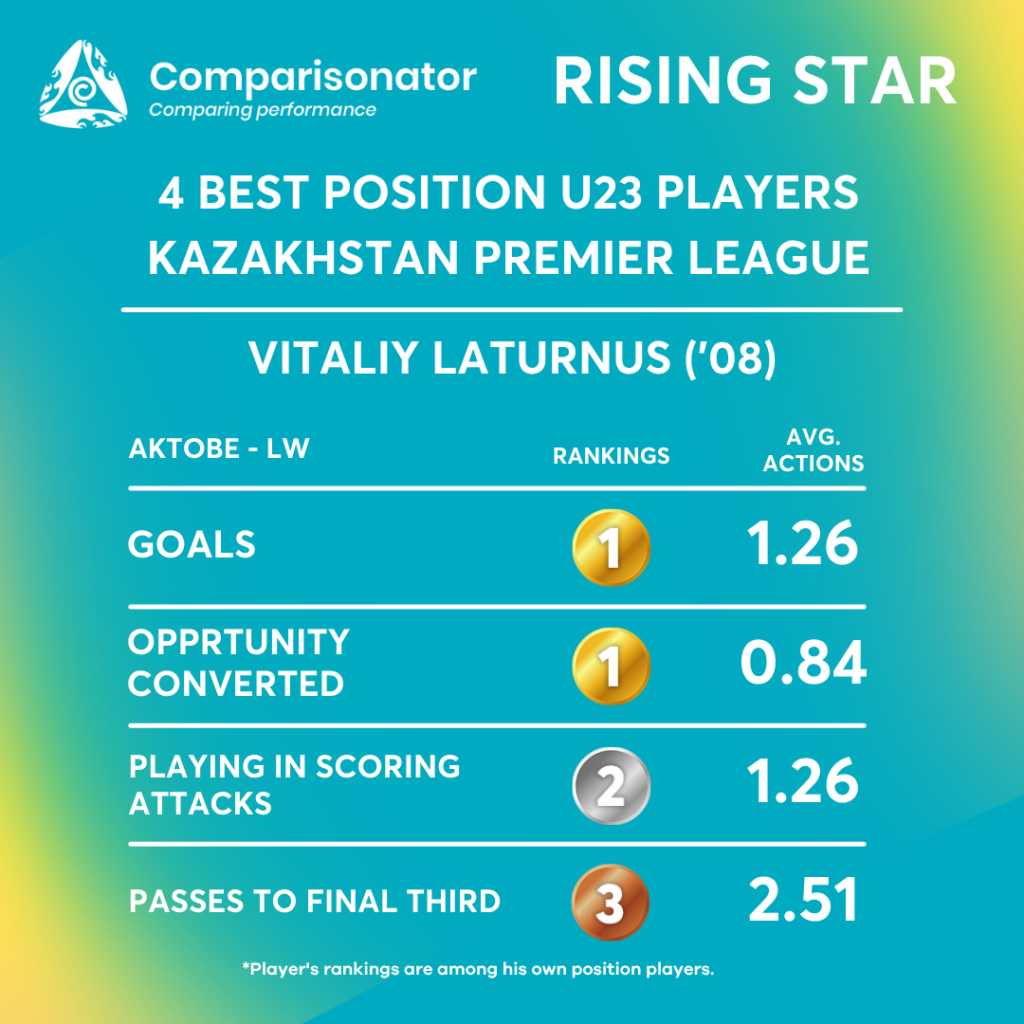
Vitaly Laturnus (’08) (LW) – Aktobe
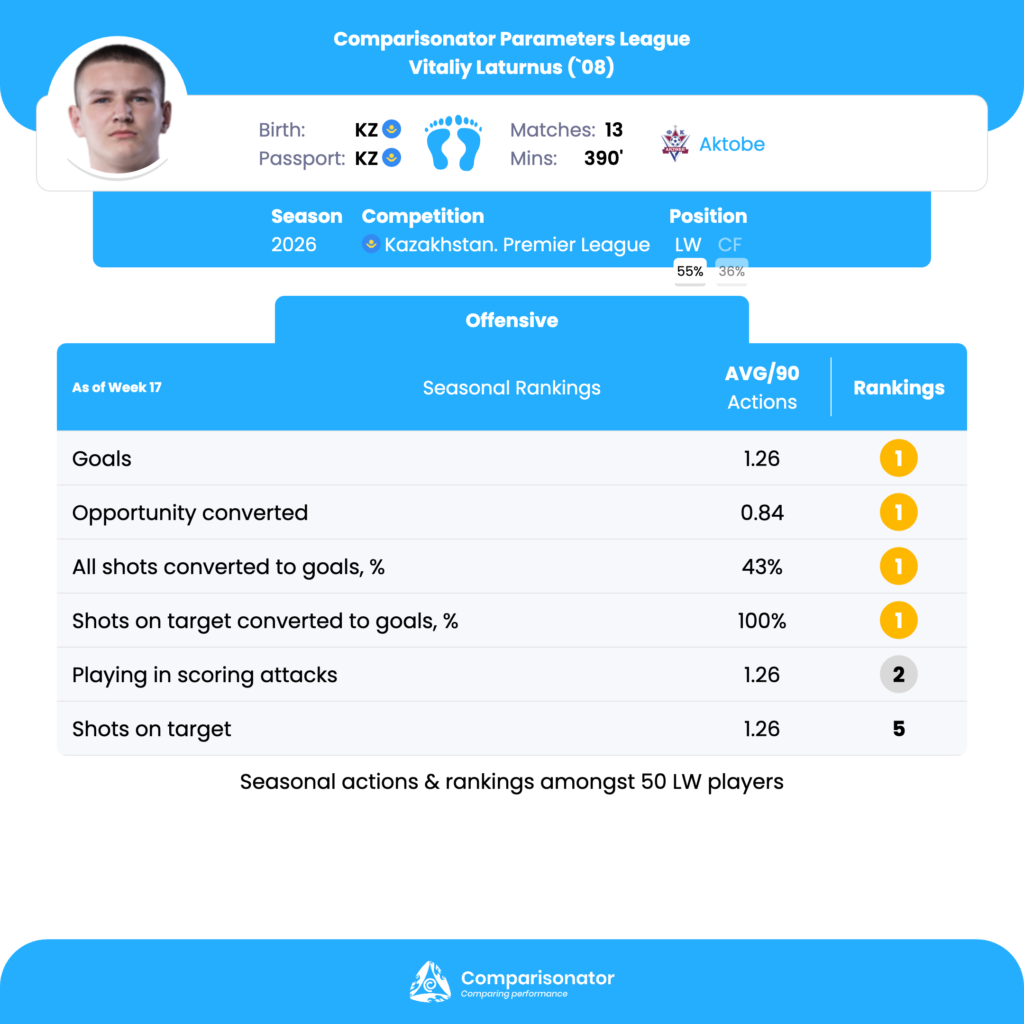
Vitaly Laturnus ‘s CompaAI Parameters League Offensive report:
Laturnus’ most significant strength is his elite finishing output. He ranks 1st out of 50 LW players with 1.26 goals per 90, well ahead of the next best performer, Jean-Morel Poé (0.55). This is reinforced by his 1st place rank in opportunity converted per 90 with 0.84, again above Poé (0.55). Furthermore, he leads the position in all shots converted to goals at 42.86%, beating out Azamat Tuyakbaev (33.33%), and is tied for 1st in shots on target converted to goals at 100%. This highlights a forward who is exceptionally efficient in finishing situations. Tactically, he is highly valuable for teams that create fewer but cleaner chances, or in transition-based systems where the winger arrives in the box primarily to finish rather than participate heavily in the build-up.
His scoring involvement is backed by a strong presence in attacking sequences. Laturnus ranks 2nd out of 50 in playing in scoring attacks with 1.26 per 90, just behind Erkebulan Nurgaliev (1.46). He also sits 5th in shots on target per 90 with 1.26, and 6th in shots per 90 with 2.93, trailing leaders like Elkhan Astanov (4.18) and Jean-Morel Poé (3.49). This proves he is not only a clinical finisher but also consistently arrives in threatening positions. Tactically, this makes him an ideal wide attacker who aggressively attacks the box and stays close to the end point of offensive moves.
He also demonstrates a respectable footed finishing balance, recording 66.67% of goals by right foot (ranking 15th) and 33.33% by left foot (ranking 10th). This suggests he is not entirely one-foot dependent in scoring actions. When combined with his 0.37 xG per 90, which ranks 8th, it shows he produces a decent underlying shot value despite not being the most volume-heavy attacker. Ultimately, this indicates a player who reliably gets into reasonable scoring zones rather than settling for low-value attempts.
Vitaly Laturnus (’08) (LW) – Aktobe
Miras Rikhard (’95) (GK) – Irtysh
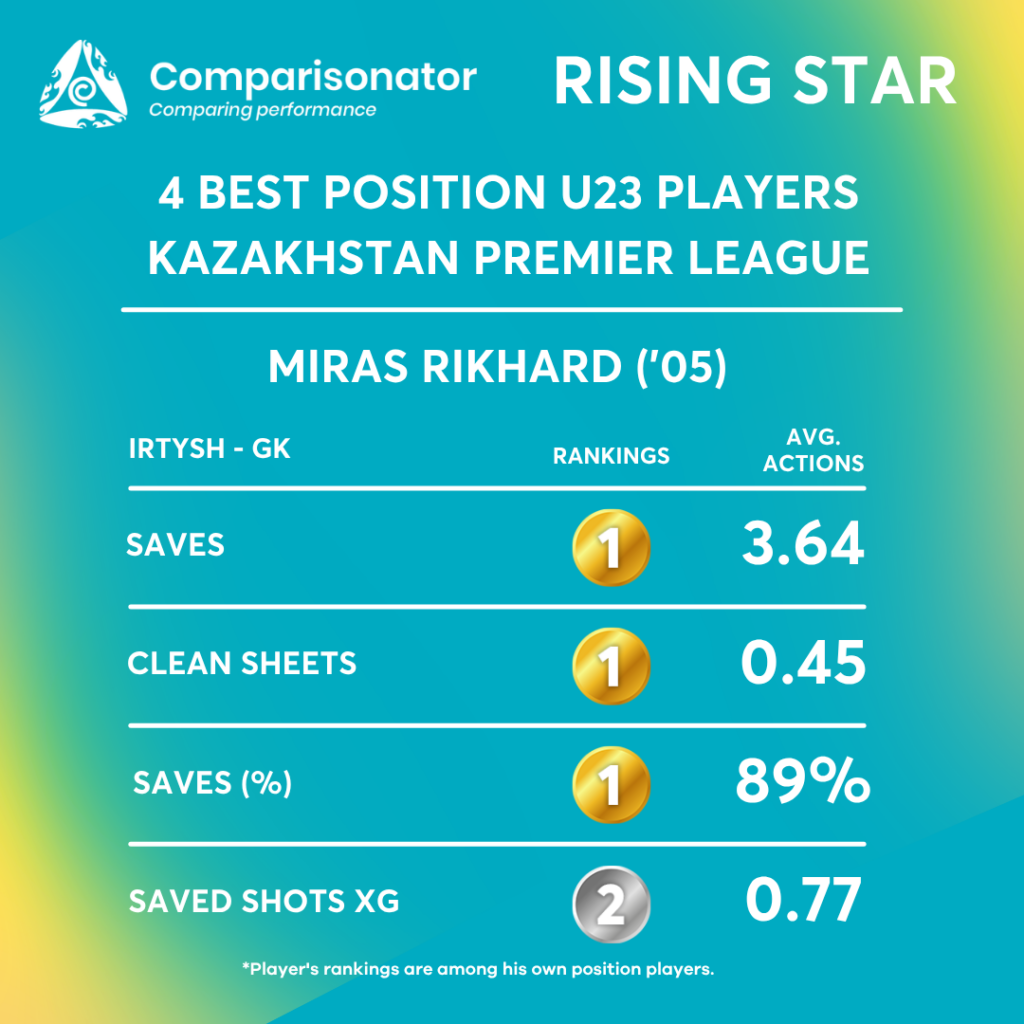
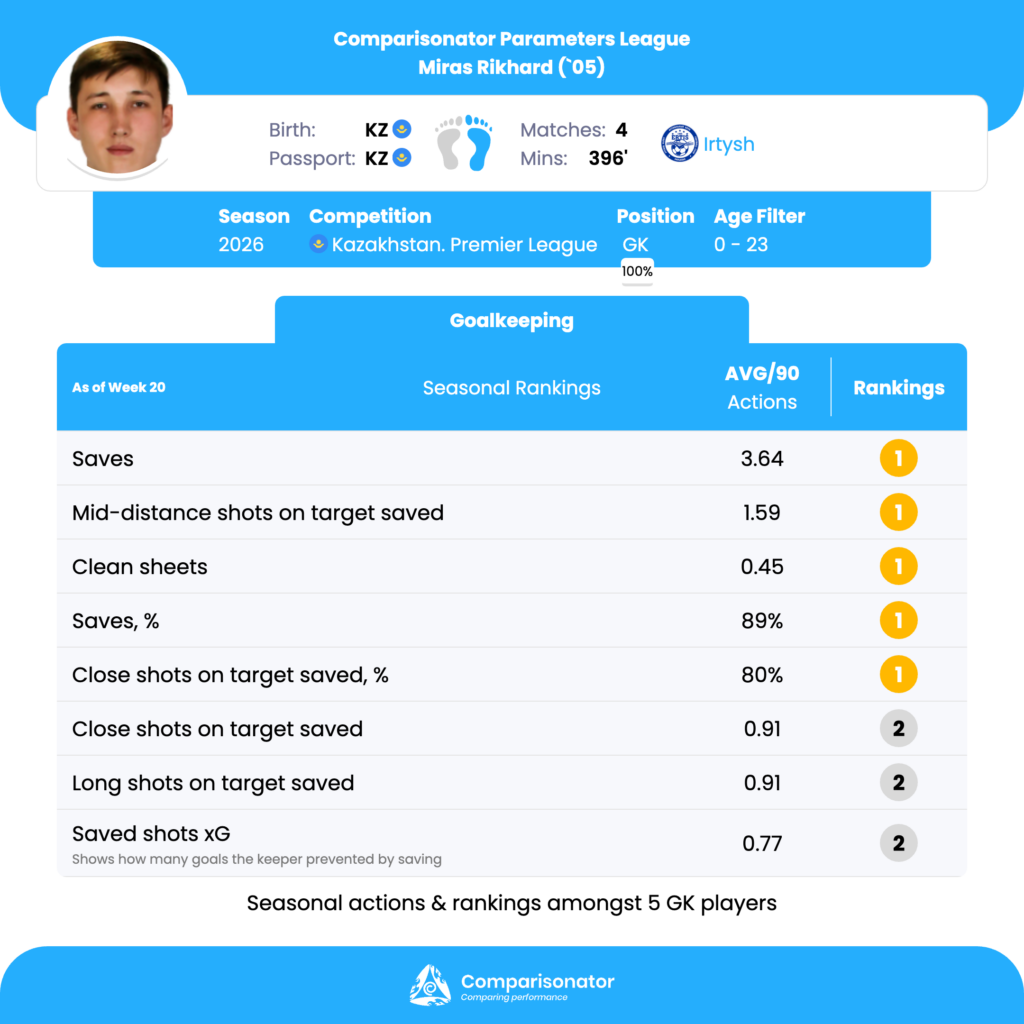
Miras Rikhard ‘s CompaAI Parameters League Goalkeeping report:
Rikhard’s clearest strength is his overall shot-stopping volume and efficiency. He ranks 1st out of 5 in Saves with 4.0 per match, ahead of A. Egorov (3.0), and 1st in Saved shots xG with 0.85 per match, above Egorov (0.74). This indicates a highly involved goalkeeper who prevents a strong amount of expected goals. Tactically, he acts as a reliable last line of resistance for a team that allows a reasonable number of attempts but needs a keeper capable of absorbing heavy pressure.
He also leads the group in Mid-distance shots on target saved with 1.75 per match (ranking 1st out of 5) and Mid-distance shots on target saved, % with 100%. Demonstrating consistent shot-stopping, he posts 88.89% Saves (ranking 1st) and 80% Close shots on target saved, % among the top performers. This consistency against central and medium-range shots is highly valuable for teams defending deeper or facing frequent penalty-box entries. Furthermore, his 0.5 clean sheets per match ranks 1st out of 5, slightly ahead of Temirlan Anarbekov (0.45), proving his individual shot-stopping directly translates into tangible match-level defensive outcomes.
Rikhard’s goals-prevention profile is equally competitive. He records 0.3 Conceded goals xG per match, ranking 1st out of 5 and bettering Temirlan Anarbekov (0.44). He also sits 2nd out of 5 in Goals conceded with 0.75 per match, just behind Anarbekov (0.7). This highlights his ability to not only make raw saves but also suppress the overall quality of conceded goals. Tactically, this profile perfectly suits a side needing a goalkeeper to protect leads and keep expected damage low even when opponents successfully breach shooting zones.
Miras Rikhard (’95) (GK) – Irtysh
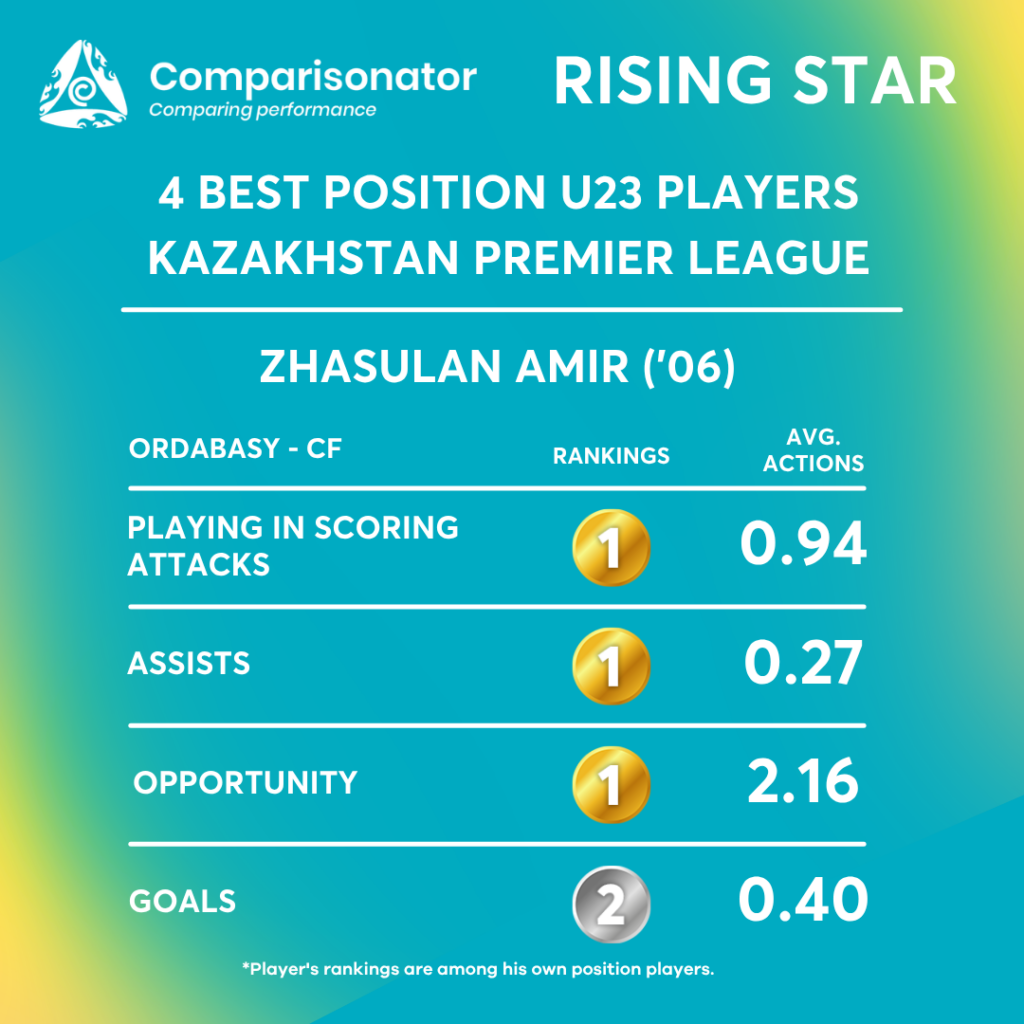
Zhasulan Amir (’06) (CF) – Ordabasy
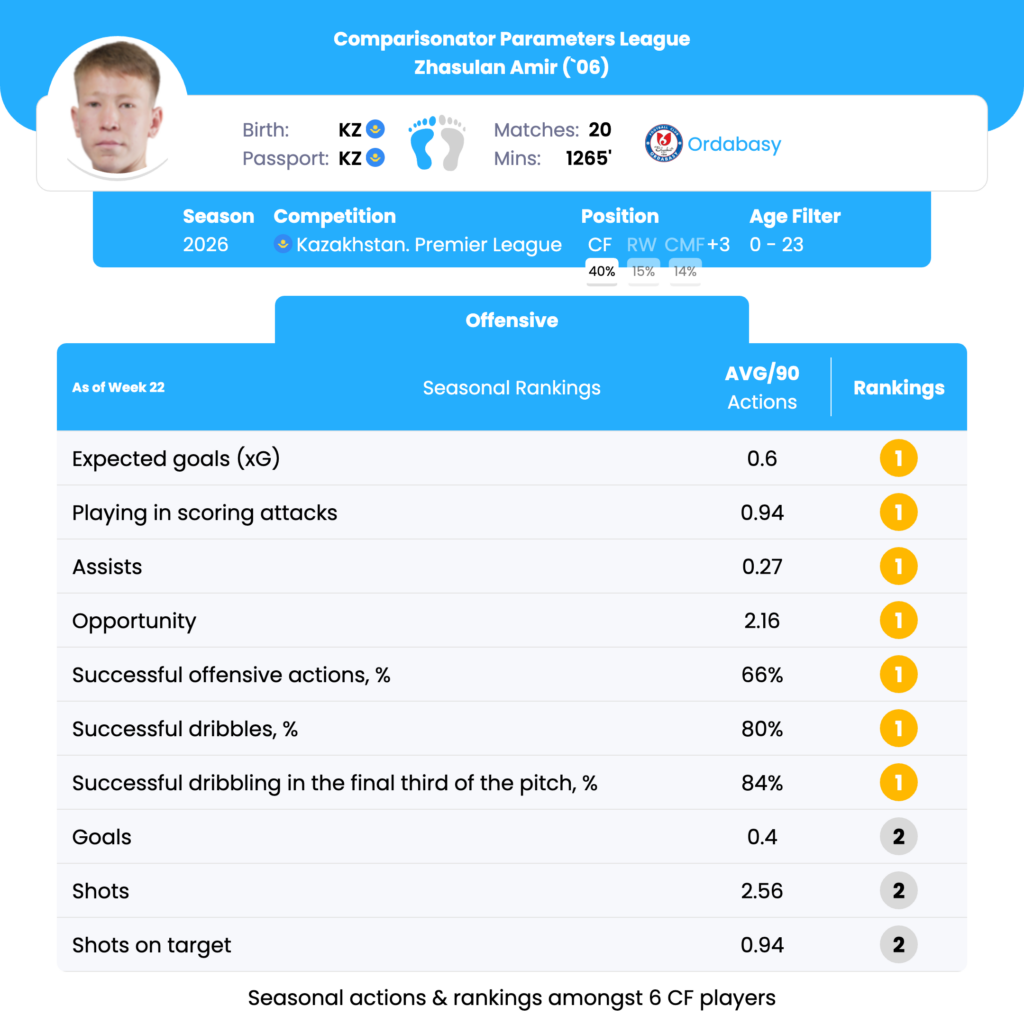
Zhasulan Amir‘s CompaAI Parameters League Offensive report:
Zhasulan Amir’s clearest advantage is his finishing output and attacking efficiency in key scoring metrics. He ranks 1st out of 6 CFs in Goals by head average per match (0.1), Expected goals (xG) average per match (0.44), Assists average per match (0.2), Opportunity average per match (1.6), Successful offensive actions, % average per match (66.24), Direct free kicks on target, % average per match (0), Successful dribbles, % average per match (80), Successful dribbling in the final third, % average per match (84.21), Goals by head, % average per match (14.29), Penalties conversion, % average per match (0), and Shots on target converted to goals, % average per match (42.86). Being top or tied for top ahead of players like Konstantin Dorofeev, Dragan Stoisavljevic, and Dastan Satpaev points to a striker who consistently enters scoring areas, converts chances efficiently, and adds value through combinations. Tactically, he fits perfectly in systems relying on a forward who can finish and support subsequent actions rather than operating purely as a target man.
His ball-carrying impact is another notable strength. Amir is 3rd out of 6 in Dribbles average per match (2.5), Successful dribbles average per match (2), Dribbling in the final third average per match (1.9), Successful dribbling in the final third average per match (1.6), and Progressive runs average per match (1.6). While he trails Seif Popov and Dastan Satpaev in most of these volume-based actions, his high efficiency keeps him highly competitive. This highlights a forward capable of carrying the ball into dangerous zones and breaking lines when given space to attack defenders directly. Tactically, this makes him highly useful in transitions, direct attacks, and roles expecting the striker to create separation through dribbling rather than only receiving passes to feet.
His shot selection and goal threat remain highly respectable even if not always volume-heavy. Amir ranks 2nd out of 6 in Goals average per match (0.3), Playing in scoring attacks average per match (0.7), Shots average per match (1.9), Shots on target average per match (0.7), Opportunity converted average per match (0.3), and All shots converted to goals, % average per match (15.79). Though he trails Dastan Satpaev in these measures, he stays close enough to remain one of the premier offensive references in his group. This profile ideally suits a team valuing a forward who contributes effectively without requiring a very high shot volume, particularly in structures generating chances through collective movement and link play.
Zhasulan Amir (’06) (CF) – Ordabasy
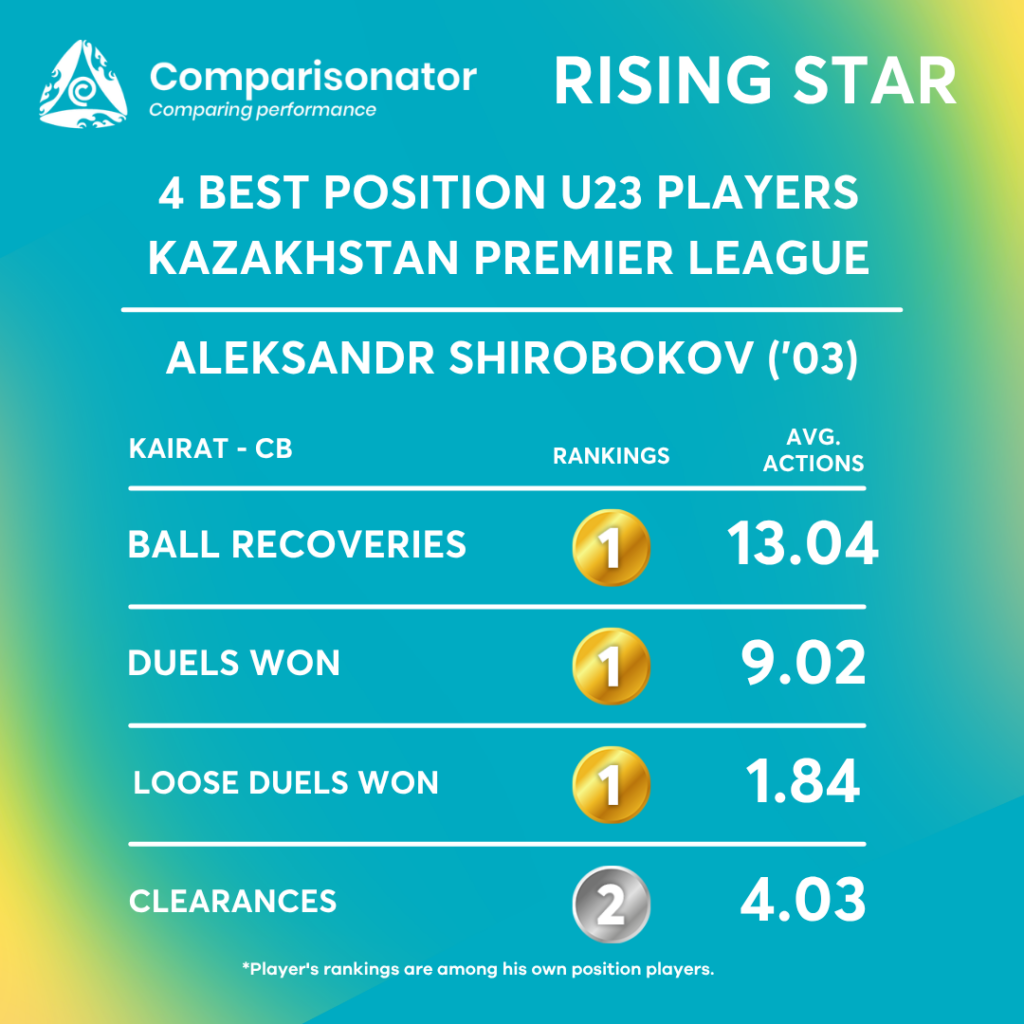
Aleksandr Shirobokov (’03) – Kairat
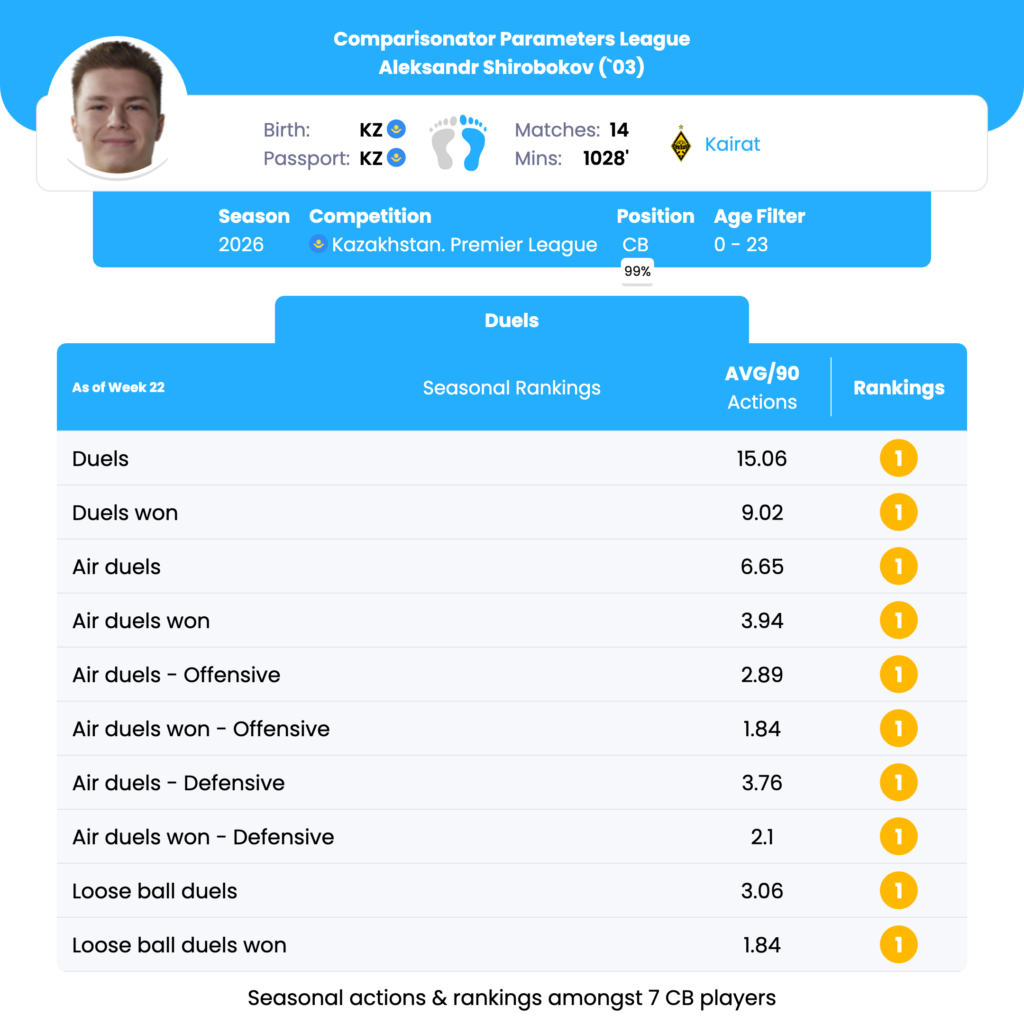
Aleksandr Shirobokov‘s CompaAI Parameters League Defensive and Duels report:
Shirobokov’s most obvious strength is his aerial volume and control. He ranks 1st out of 7 in Air duels average per match (5.43) ahead of Bakhtiyar Toleuov (4.8), 1st in Air duels won average per match (3.21) ahead of Borys Lototskyi (2.89), 1st in Air duels – Offensive average per match (2.36) ahead of Lototskyi (2.0), 1st in Air duels won – Defensive average per match (1.71) ahead of Salamat Zhumabekov (1.57), and 1st in Air duels won – Defensive, % (55.81) ahead of Zhumabekov (47.83). This indicates a centre-back heavily involved in aerial contests across both attacking and defensive phases. Tactically, he fits perfectly in a side needing a dominant aerial reference to defend crosses, long balls, and set-pieces.
His overall duel volume and ball-contact combativeness are equally impressive. He ranks 1st in Loose ball duels average per match (2.5) and 1st in Loose ball duels won average per match (1.5), both ahead of Borys Lototskyi (1.8 and 1.11 respectively). These numbers highlight strong reaction speed and competitiveness around second balls, making him highly valuable for a center-back defending direct football, transition moments, and clearances dropping into contested zones.
Furthermore, his total duel output across all types remains consistently strong. He ranks 2nd out of 7 in Duels won average per match (7.36) behind Lototskyi (9.06), 2nd in Air duels won – Offensive average per match (1.5) behind Lototskyi (1.67), 2nd in Air duels – Defensive average per match (3.07) behind Zhumabekov (3.29), and 2nd in Duels won, % (59.88) behind Egor Tkachenko (68.92). This proves he consistently contributes to the wider duel landscape with a solid success rate, supporting his use in defensive units requiring reliable 1v1 resistance and the regular contesting of direct play.
Aleksandr Shirobokov (’03) – Kairat